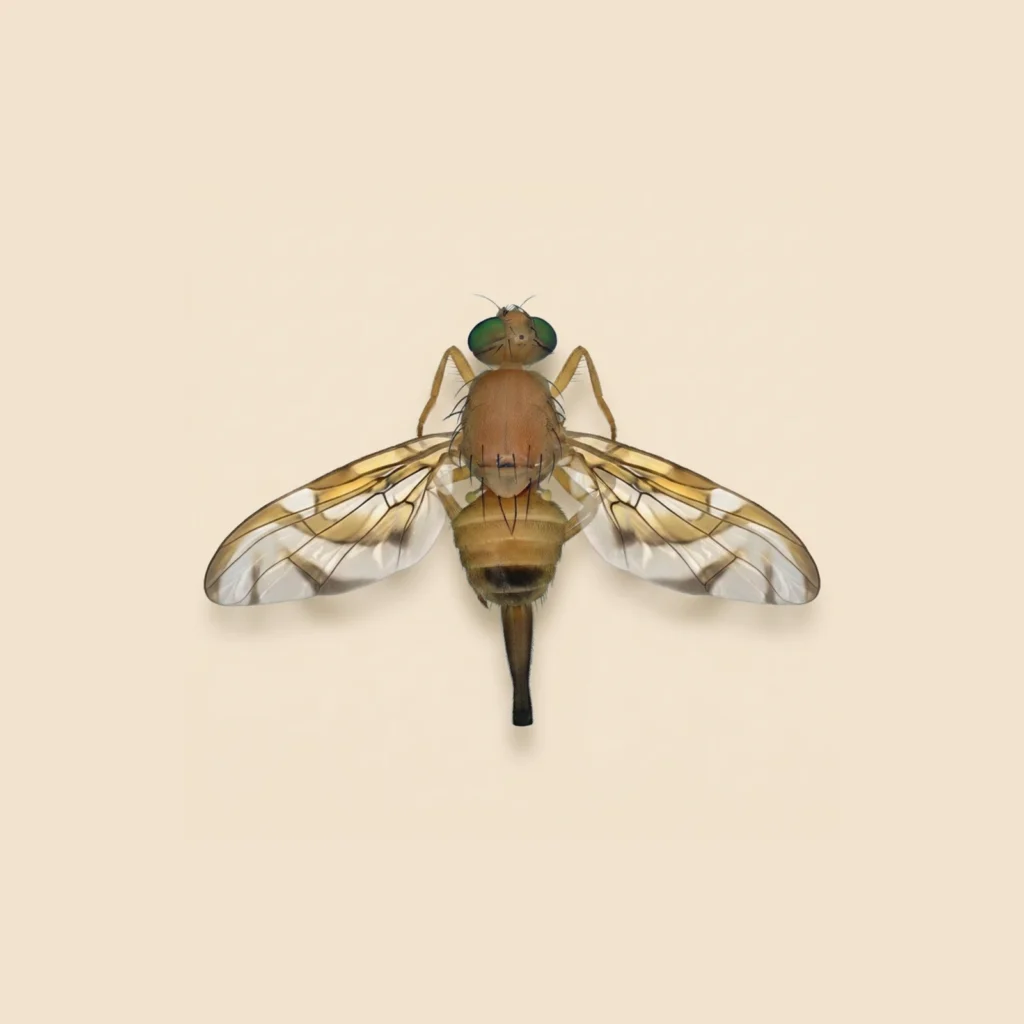
Pale yellow wings with brown markings
Get rid of the mexican fruit fly
At Fumimax, we take care of eliminating the mexican fruit fly and establish measures to prevent new outbreaks of this and other potential pests in your spaces.
Eradicating the mexican fruit fly in your spaces is not a one-time action; it is a continuous process. Through our Inspection, Fumigation, and Monitoring process, we ensure your spaces remain pest-free.
Fumimax can help you keep the mexican fruit fly and other harmful species far away from you and your spaces.
Understanding the mexican fruit fly
Appearance
- Size: They are relatively large flies. Adults measure between 7 and 11 millimeters long, almost the size of a house fly. Do not confuse them with the tiny flies (Drosophila) that usually hover around ripe bananas in the kitchen.
- Wings: They have transparent wings with characteristic yellow and brown bands and spots.
- Abdomen: Females have a long, thin tube at the rear of their abdomen (ovipositor) that they use to inject their eggs inside the fruit.
- Color and texture: Their body is a pale yellow to orange/brown color, very different from the dark color of common flies.
Behavior and diet
- Indoors and outdoors: They are very active during the day. Their main habitat is orchards and gardens with fruit trees, but they enter homes and businesses following the scent of fresh or decaying fruit.
- Where to look: They gather around citrus, mango, or peach trees in the yard. Indoors, they head straight for fruit bowls in the kitchen, uncovered trash cans, or food storage areas.
- Diet and feeding: Adults feed on nectar, fruit juices, and sweet liquids. The larvae, on the other hand, devour the fresh fruit where they hatch from the inside out.
Reproduction
- Nesting areas: Females do not lay eggs on surfaces or in the trash. They pierce the skin of fresh fruits (still hanging on the tree or freshly picked) and deposit their eggs directly inside.
- Timing: A female lays hundreds of eggs during her adult life.
- Growth: The offspring (small white maggots) hatch inside the fruit, feed on the pulp, and rot it. Then they fall to the soil to bury themselves and become adult flies. In the warm climate of the Bajío region, this process is extremely fast.
Additional information
- Damage to orchards: It is one of the most destructive agricultural pests. In a home setting, a single infested tree can ruin its entire harvest for the season in a matter of days.
YOUR PEACE OF MIND AND
YOUR SPACES' HYGIENE IS
GUARANTEED WITH
FUMIMAX®
Schedule a visit from one of our technicians in the Bajio region and let our team of professionals deal with your pest problems.
PREVENTIVE HEALTH:
LEARN HOW TO AVOID
PESTS
IN THE FIRST PLACE
The best way to fight pests is to keep them from getting in. We teach you simple habits to care for the hygiene of your factory, business, or home.